Ford Ranger Generations & Fitment Guide: Every Year, Explained
Which Ford Ranger do you have — classic compact or modern midsize? A year-by-year breakdown of every generation and what it means when you buy parts, so you order the right piece the first time.
Parts Covered in This Guide
New wheel and tire setups

Keeping the cab clean and comfortable

ford ranger owners

ford ranger owners
| # | Product | Owner Reviews | Availability | Best For | |
|---|---|---|---|---|---|
| 1 | 3 | $26.99 In Stock at Amazon | New wheel and tire setups | ||
| 2 | 158 | $14.24 In Stock at Amazon | Keeping the cab clean and comfortable | ||
| 3 | 311 | $16.74 In Stock at Amazon | ford ranger owners | Buy on Amazon
Prime Eligible
| |
| 4 | 2 | $120.99 In Stock at Amazon | ford ranger owners | Buy on Amazon
Prime Eligible
|
New and aftermarket parts, checked in stock. Looking for used, OEM or take-off parts instead? Jump to the eBay Motors lane.
The Ford Ranger name has covered two very different trucks in North America, and the fastest way to buy the wrong part is to shop by name instead of by generation. This guide breaks down every era of the Ranger, spells out the year ranges that actually matter for fitment, and points you to the right parts categories and marketplaces for each one. Bookmark it — you’ll come back to it every time you order a component.
The single most important line: 2011
If you remember one thing, remember this. The classic compact Ranger was built through the 2011 model year and then discontinued in North America (a shortened 2012 run went to fleet sales only). The modern midsize Ranger returned for 2019, launching as the fourth-generation truck in January of that year. There was no new Ranger sold here for 2012–2018. These are entirely different vehicles on different platforms — they share a badge and nothing else. A tailgate, a control arm, or a headlight from a 2005 Ranger will not fit a 2020 Ranger, full stop. (Model-year timeline confirmed against the Ford Ranger (Americas) history on Wikipedia.)
Get that boundary right and you’ve avoided the most common Ranger parts-ordering mistake there is.
Classic compact Ranger (1983–2011)
The original Ranger was Ford’s compact pickup, and it ran for nearly three decades with a series of restyles. For parts, think of it in these blocks:
- First generation (1983–1988) — the truck that replaced the Ford Courier. Simple, light, and now firmly in the vintage/restoration camp.
- Second generation (1989–1992) — an aerodynamic restyle on the same basic platform.
- Third generation (1993–1997) — new sheet metal and a more modern cab.
- Fourth generation (1998–2011) — by far the longest-lived Ranger. This is the one most classic-Ranger owners have, and the last one rolled off the line in December 2011.
Across this run you’ll find four-cylinder engines plus the well-known 3.0L and 4.0L V6 options. Because the platform lived so long, many wear parts are shared across big year ranges — but body panels, lighting, and interior trim still changed generation to generation. When you shop the classic trucks, year-range accuracy is everything: a “1998–2011” listing is common for mechanical parts, but body and trim parts are usually narrower.
Where to buy classic parts: used, OEM, and long-discontinued pieces are the sweet spot for eBay Motors — that’s where the salvage-yard and NOS inventory lives. Use the “Classic Ranger OEM parts” button above. For new aftermarket wear items — brakes, suspension, and maintenance consumables — Amazon Automotive still stocks plenty for the fourth-gen trucks.
The North American gap (2012–2018)
Ford kept selling a global T6 Ranger overseas during these years, but it was never offered new in North America. If you’re in the US or Canada and someone’s selling you a “2015 Ranger,” it’s either an import, a fleet oddity, or a mislabeled year. Parts for the global T6 don’t reliably match the North American trucks, so tread carefully and verify the market the part was made for.
Modern midsize Ranger (2019–2023)
The Ranger returned to North America for 2019 as a midsize truck — bigger than the old compact — built on the global T6 architecture and powered by Ford’s 2.3L EcoBoost turbocharged four-cylinder with a 10-speed automatic. This is the truck that most “Ford Ranger 2019–2023” accessories are cut for.
This generation is a strong platform for bolt-on upgrades: lift and leveling kits, LED lighting, performance intakes and tunes, and towing gear are all widely available. When you shop, look for listings that specifically call out 2019–2023 — that’s the fitment window before the next-gen redesign.
Next-generation Ranger (2024–present)
For 2024, Ford launched the next-generation Ranger on a revised platform: new sheet metal, a wider track, a redesigned interior with a large portrait touchscreen, and updated electronics. The 2.3L EcoBoost carries over as the base engine, higher trims add a new 2.7L EcoBoost V6 option, and the Ranger Raptor tops the lineup with its own 3.0L twin-turbo EcoBoost V6.
Because so much changed inside and out, 2019–2023 parts are not a safe assumption on a 2024+ truck. Interior trim, floor and door mats, console organizers, and exterior accessories are shaped for the new dash, console, and body — buy them listed for your specific year. This is the newest and fastest-growing fitment window, and the accessory catalog is filling in quickly.
How to nail fitment every time
- Start with the year, then confirm the generation using the blocks above.
- Respect the boundaries: the 2011/2019 gap and the 2023/2024 redesign are hard walls for most parts.
- Read the listing’s fitment range — “fits 2019–2026” is meaningful; “fits Ford Ranger” with no years is a red flag.
- For exact-fit components, check the VIN or door-jamb build sticker, not just the model year — trim and drivetrain (2WD vs 4WD) can change the part.
- Match the marketplace to the part: new aftermarket on Amazon Automotive, used/OEM/discontinued on eBay Motors via the buttons above.
Keep going
Now that you know your generation, dive into the right category or guide:
- Brakes · Suspension & Lift · Lighting · Engine & Performance · Exterior · Interior · Wheels & Tires · Towing · Maintenance
- Ranger Lift Kit Buyer’s Guide
- Best Ranger Brake Upgrades
- Best Ranger Performance Upgrades
Buy by generation, confirm the year range, and check the VIN when it counts — do that and the right part shows up the first time.
Shopping used or OEM? Try eBay Motors
Live listings for the parts covered in this guide — prices set by the seller.
Recommended Parts for This Guide
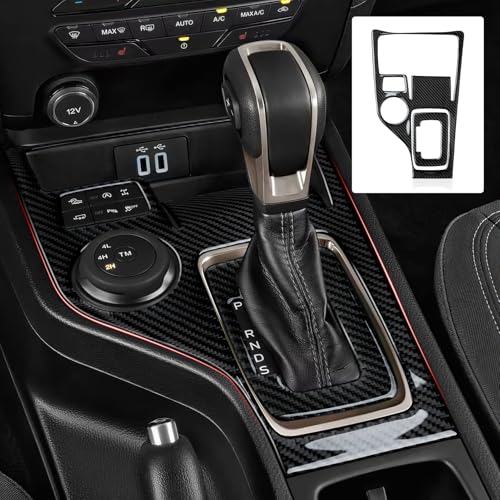
Car Sticker Carbon Fiber Gear Shift Control Panel Decal Interior Trim Cover for Ford Ranger XLT Lariat XL 2019 2020 2021 2022 2023 Accessories (Style B)
3 owner reviews
Car Sticker Carbon Fiber Gear Shift Control Panel Decal Interior Trim Cover for Ford Ranger XLT Lariat XL 2019 2020 2021 2022 2023 Accessories (Style B). Wheels, tires, and hardware sized and rated for the Ranger.
- Truck-rated load ratings
- Ranger fitments
Center Console Organizer for Ford Ranger 2019-2021 2022 2023 XL XLT Lariat | Ranger Interior Accessories, Armrest Storage Box Secondary Insert Tray, Black
158 owner reviews
HGWEI Center Console Organizer Compatible with Ford Ranger 2019 2020 2021 2022 2023 XL XLT Lariat Accessories, Armrest Storage Box Secondary Insert Tray, Black. Protect your cab and keep the inside of your Ranger looking sharp.
- Protects your cab
- Custom Ranger fit
Antenna for Truck Ford Ranger 2019-2027 | 2" Short Aluminum Replacement, Seamlessly Blends with Vehicle | Prevents Car Wash & Garage Damage
311 owner reviews
Short Antenna for Truck Ford Ranger 2019-2026, Car Antenna Replacement — Seamlessly Blends with Vehicle, Aluminum 2″ Stylish & Compact, No More Broken Antennas in Car Wash or Garage. A quality upgrade or replacement part for your ford ranger.
- Fits ford ranger
- Quality build
STSEV01 Rear Spoiler Cab Roof Wing for Ford Ranger 2019-2023 Accessories | (for Lariat, XL, XLT), Nice Clean Look Mods, Aggressive Look, Rear Window Top Lip, Gloss Black Finish, Tape Install, ABS
2 owner reviews
STSEV01 Rear Spoiler Cab Roof Wing for Ford Ranger 2019-2023 Accessories | (for Lariat, XL, XLT), Nice Clean Look Mods, Aggressive Look, Rear Window Top Lip, Gloss Black Finish, Tape Install, ABS. A quality upgrade or replacement part for your ford ranger.
- Fits ford ranger
- Quality build
Frequently Asked Questions
How do I know which generation of Ford Ranger I have?
Will parts from an older Ranger fit my newer one?
Are 2019–2023 and 2024+ Ranger parts interchangeable?
What engine does the modern Ranger use?
Keep reading
Other Ranger references that cover the same systems — worth a look before you order.